
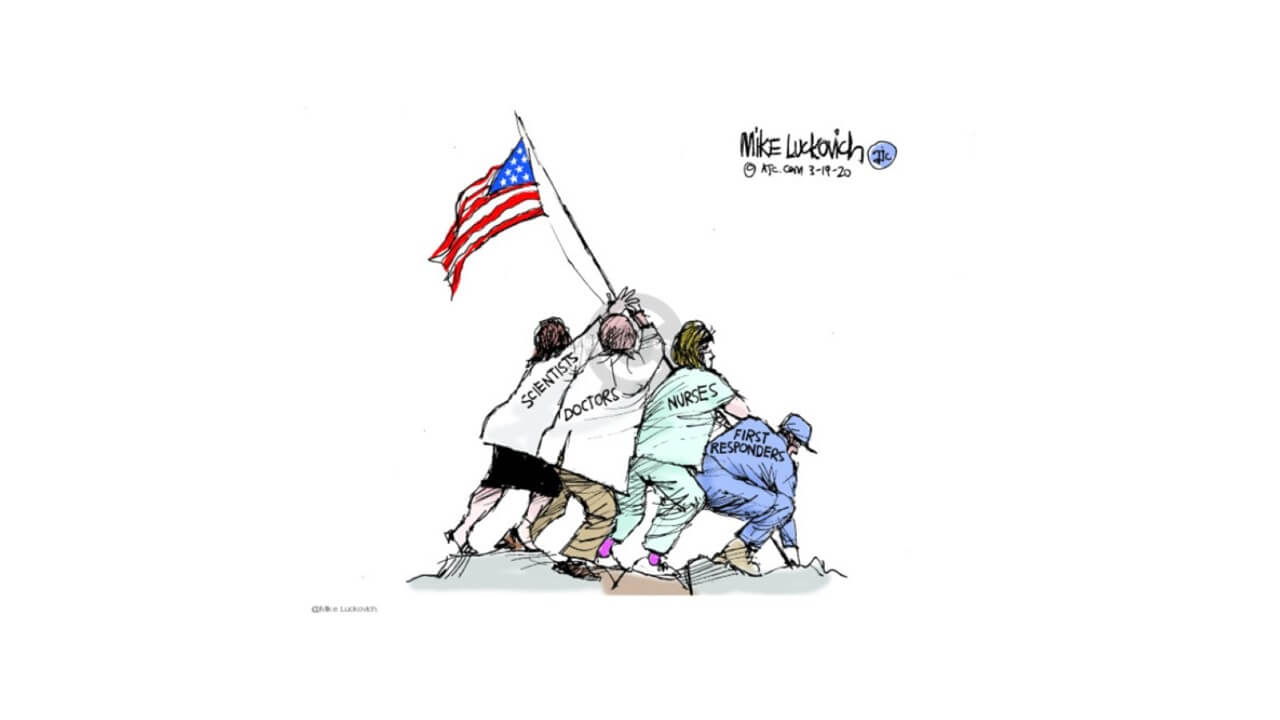
In an article out last week, bioethicicsts Alyssa Burgart and Holly Tabor discuss the recent Covid-19 outbreak and the moral courage shown by frontline healthcare professionals. Moral courage, or “the ability to take action for moral reasons, despite the risk of adverse consequences ” has been paramount to the response to this outbreak. Were it not for Dr. Wenliang in China who first tried to tell his physician colleagues about this new virus he was seeing, who knows how long before the Chinese government would have waited to try to contain the virus. Dr. Wenliang not only contracted the virus himself but died in the hospital last month at age 34. Fast forward to today, one full week after shelter-in-place orders have been given to 167 million people in 17 states, 18 counties and 10 cities as of this morning per the NYT. In the meantime, healthcare workers around the U.S. and our friends and families have been lobbying our organizations, our state governments and the U.S. Congress to ensure we have adequate personal protective equipment (PPE) and countless among us have put our jobs in jeopardy for speaking out. How do we provide good care to our patients if we cannot be protected? What do we do when we have a shortage of workers due to self-quarantine after exposure when there aren’t enough tests for both patients and us? And then what happens when we run out of ICU beds and ventilators? Regular hospital beds? Even as CDC guidelines change on a daily basis, lack of testing availability, scarcity of PPE, and amid concerns about workplace exposure to the virus and fears that we may inadvertently spread the virus to our families when we come home from work, we must continue to show moral courage and speak out. Whether to our colleagues, employers, public health departments or our elected officials, we must be willing to say something in the face of these very difficult ethical problems. As Burgart and Tabor note at the end of their article:
“These actions are especially urgent when you worry that no one else sees what you see. People around you may be too afraid to speak up and some will thank you for saying what they couldn’t. Organizations of all kinds are poorly designed for receiving, processing, and responding to front line concerns, especially when they challenge the status quo or conventional wisdom. These are extraordinary times, and with them come an extraordinary moral imperative to speak up, to ensure that the structures of normalcy do not silence the urgent needs of the crisis. In speaking up, even when it risks one’s job, providers can help changes happen before it may be too late to save lives.”